Best Solar Panel in India: A Practical Buyer's Guide for 2026
Last updated at : Aug 13, 2026
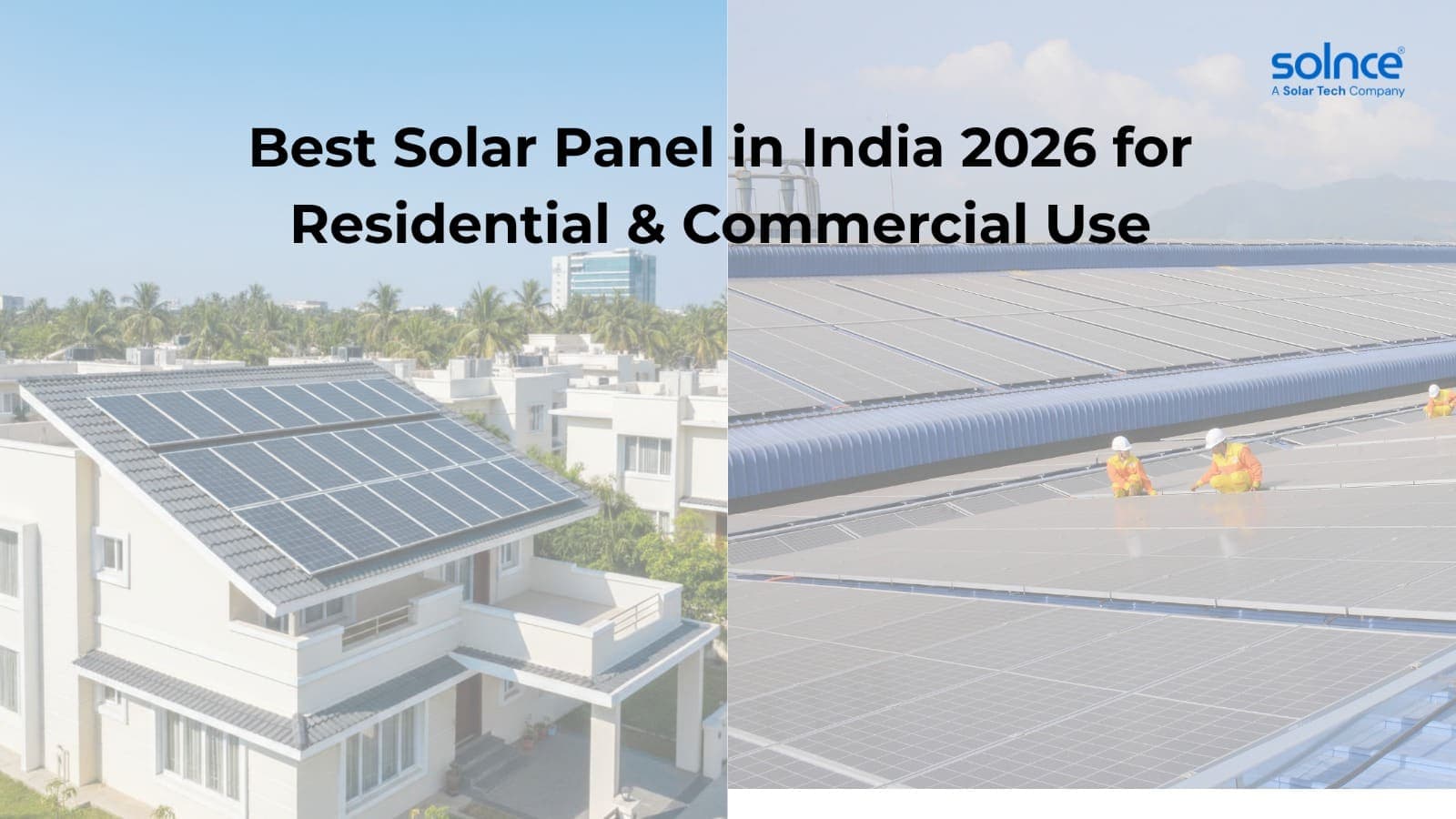
Picking the "best" solar panel in India is less about chasing one famous brand and more about matching the right technology to your roof, your budget and your electricity bill. The market in 2026 is mature, with several tier-1 Indian manufacturers producing modules that rival global names. This guide walks you through what actually matters so you can buy with confidence.
What Makes a Panel "Best"?
A panel is only as good as the job it does on your specific site. Instead of asking "which is the best panel," ask "which panel gives me the most generation per rupee over 25 years?" That answer depends on four things:
- Efficiency — how much sunlight the panel turns into electricity. Higher efficiency means fewer panels for the same output, which matters on small roofs.
- Warranty — both the product warranty (against defects) and the performance warranty (guaranteed output over time).
- Degradation rate — how slowly the panel loses output each year. Premium modules now degrade well under 0.5% annually.
- Build quality and certification — MNRE listing and IEC certification are non-negotiable for subsidy eligibility and long-term reliability.
The Main Panel Technologies in 2026
Most homes and businesses today choose between a few module types. Here is how they compare.
| Technology | Typical Efficiency | Relative Cost | Best For |
|---|---|---|---|
| TOPCon (mono) | 21–23% | High | Premium homes, tight roofs, commercial |
| Mono PERC | 19–21% | Medium-high | Most residential rooftops |
| Bifacial | 21–23% | High | Ground mounts, reflective surfaces |
| Polycrystalline | 15–18% | Low | Budget builds with ample space |
TOPCon has become the default premium choice in India, offering excellent efficiency and low degradation. Mono PERC remains the workhorse for the majority of rooftop installs, balancing cost and performance.
Trusted Indian Manufacturers
You do not need to import panels to get top-tier quality. India's leading makers supply both domestic and export markets:
- Waaree Solar — India's largest module maker, broad TOPCon and bifacial range.
- Adani Solar — high-efficiency mono PERC and TOPCon modules with strong vertical integration.
- Tata Power Solar — long track record and dependable after-sales support.
- Vikram Solar — well-regarded modules used widely in rooftop and utility projects.
- RenewSys — India's first integrated cell and module manufacturer.
Most of these brands offer a 12–15 year product warranty and a 25-year performance warranty, with guaranteed output typically above 84–87% at year 25.
How to Size and Choose for Your Home
A rough rule: a 3 kW system covers many urban households and needs only 5–6 panels when using high-wattage 610–620W TOPCon modules. Larger families or all-electric homes often move to 5 kW or more. Match panel choice to roof area first:
- Small roof, high bill: go for TOPCon or high-watt mono PERC to maximise output per square metre.
- Large roof, tight budget: mono PERC or even polycrystalline can deliver more capacity for less.
- Commercial or open land: bifacial panels on a ground mounted solar structure capture reflected light for extra yield.
Always read the datasheet, not just the brochure. Check the temperature coefficient (lower is better in India's heat) and confirm the warranty terms in writing.
What About Warranty and Degradation?
The warranty is where many buyers get caught out. A panel can carry an impressive efficiency rating yet come with a weak performance guarantee. Always look for both numbers in writing: a product warranty that covers defects, usually around 12–15 years, and a performance warranty that guarantees output, typically 25 years. A good module will still deliver above 84–87% of its rated power in year 25.
Degradation is the silent factor. Every panel loses a little output annually, and over a 25-year life the difference between a panel that degrades at 0.4% and one at 0.8% is substantial. Premium TOPCon and bifacial modules sit at the lower end, which is part of why they justify their higher price.
Don't Forget the Balance of System
The panel grabs the headlines, but it is only one part of a solar system. The inverter converts your DC output to usable AC and has its own efficiency and warranty to weigh. The mounting structure must survive your local wind and monsoon conditions for decades. The cabling, earthing and protection devices all influence safety and lifetime yield. A premium panel paired with a weak inverter or a flimsy structure will underperform, so judge the system as a whole rather than fixating on a single component.
Common Mistakes to Avoid
- Buying on price alone and ending up with uncertified modules that void your subsidy.
- Ignoring the inverter and mounting structure, which affect lifetime output as much as the panel.
- Skipping a proper shading and load assessment before sizing the system.
- Forgetting to plan for future loads such as an EV charger or extra air conditioning, which can leave your system undersized within a year or two.
How Solnce Helps
At Solnce Energy we are technology-agnostic, which means we recommend the panel that genuinely fits your roof, budget and goals rather than the one we want to sell. Our team handles the site survey, panel and inverter selection, MNRE-compliant installation and subsidy paperwork for residential solar and commercial projects alike. Browse our services or read more on the solar blog to learn what suits you. When you are ready for a tailored recommendation, get a free quote and we will design a system around your actual electricity use.