How to Choose a Solar Hybrid Inverter: A Practical Guide
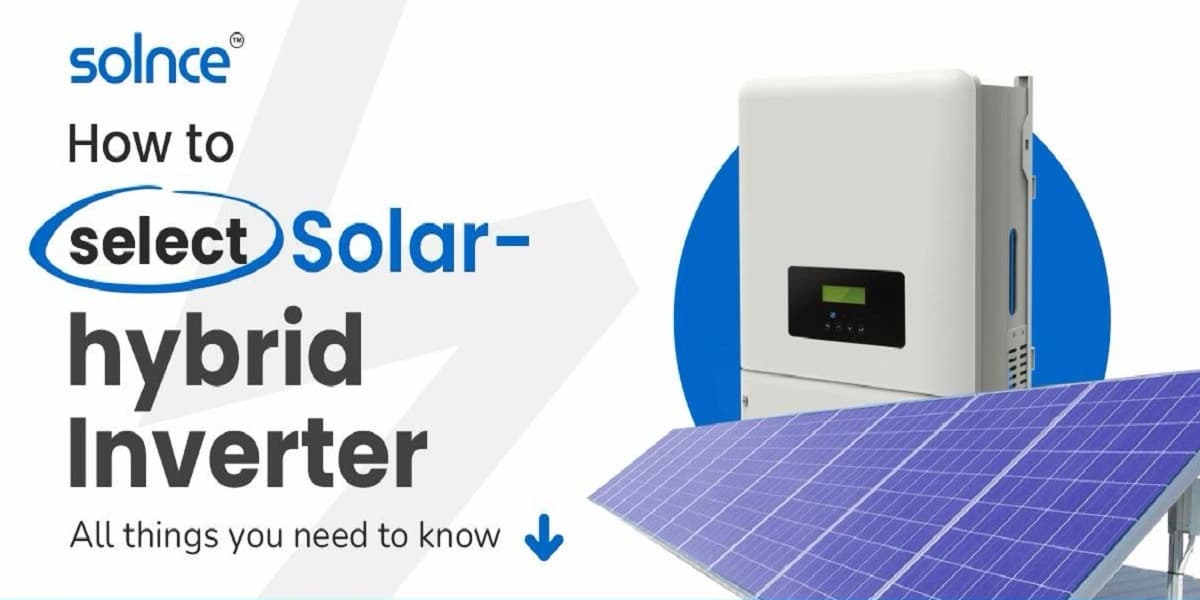
Last updated at : Aug 13, 2026
The inverter is the brain of your solar system. Panels get all the attention, but it is the inverter that turns their raw DC output into the clean AC power your appliances actually use — and a hybrid inverter does even more, juggling panels, battery and grid all at once. Choosing the right one is worth getting right, because a mismatched inverter quietly wastes solar you have already paid to generate.
What makes an inverter "hybrid"
A standard on-grid (string) inverter only converts solar DC to AC and feeds your home or the grid. An off-grid inverter only works with a battery. A hybrid inverter combines both jobs: it can run your loads from solar, charge a battery with the surplus, draw from that battery at night, and still interact with the grid when needed.
Hybrid units generally fall into three flavours:
- Storage-focused — built mainly to charge and discharge a battery.
- Solar-plus-backup — generation, storage and outage backup in one box.
- BESS-ready — designed to anchor a larger battery energy storage system.
The big advantage is flexibility: you can start on-grid today and add a battery later without replacing the inverter, as long as you buy a battery-ready model.
Step 1: Match the power rating to your load
Inverters are sold by their power rating, and the range is enormous — anywhere from about 50 watts up to 50,000 watts. For homes, the useful band is roughly 50 to 5,000 watts, and a residential unit rarely needs to exceed about 11,000 watts.
The rating must comfortably cover the appliances you might run at the same time:
- Add up the wattage of everything that could run together — AC, fridge, pump, lights, electronics.
- Add headroom for surge loads (motors and compressors spike when they start).
- Don't massively oversize either; an inverter running far below capacity is inefficient.
A quick rule of thumb: size the inverter close to your solar array's peak output and your peak simultaneous load, whichever is the binding constraint. Our engineers calculate this precisely from your appliance list.
Step 2: Look hard at efficiency
Every conversion from DC to AC loses a little energy. Good inverters operate at or very near 100% efficiency under load — in practice the best units sit around 97–98%. That difference compounds over 25 years, so even one or two percentage points matters. Always check the rated and weighted efficiency on the datasheet, not just the headline number.
Step 3: Check MPPT and battery compatibility
Two technical details decide how well the inverter harvests power:
- MPPT trackers. Maximum Power Point Tracking squeezes the most out of your panels as light changes through the day. More trackers help when panels face different directions or shading patterns.
- Battery voltage and chemistry support. If you want storage now or later, confirm the inverter supports your battery's voltage and chemistry, especially lithium (LFP).
Step 4: Demand the right protections and warranty
A solar inverter lives outdoors-adjacent and runs for decades, so build quality and safeguards are non-negotiable. Look for:
- Surge, overload and short-circuit protection
- Over-temperature and reverse-polarity safety
- A solid manufacturer warranty (5–10 years is typical for quality brands)
- Monitoring, ideally via an app, so you can spot underperformance early
Comparing the leading brands
You will see names like Sungrow, Growatt, Luminous and Solaryaan quoted often. Rather than chasing a brand, compare the specs that matter:
| What to check | Why it matters |
|---|---|
| Rated power (kW) | Must cover your peak simultaneous load |
| Peak efficiency (%) | Higher means less solar wasted |
| Number of MPPTs | Better harvest with shading or split arrays |
| Battery support | Decides if you can add storage later |
| Warranty | Protects a long-life investment |
| Monitoring | Lets you catch faults early |
A quick selection checklist
- Calculate your peak simultaneous load and array size.
- Pick a power rating that covers both with sensible headroom.
- Confirm high efficiency and the right number of MPPTs.
- Verify battery-readiness if storage is in your future.
- Insist on protections, a strong warranty and monitoring.
How Solnce helps
Picking an inverter on spec sheets alone is hard, and the wrong choice limits your system for years. At Solnce we size and source the right hybrid inverter as part of a complete residential solar design, install it correctly, and keep it healthy with ongoing solar maintenance. For more deep-dives, visit our solar blog, and when you want a system matched to your exact loads, get a free quote.