Industrial Solar Energy Solutions: Cut Power Bills and Carbon Together

Last updated at : Mar 5, 2026
For an industrial unit, electricity is rarely a small line item. It powers machinery, cooling, lighting and process loads that run for long hours, and grid tariffs only move in one direction over time. Industrial solar changes that equation. Instead of paying a rising bill to someone else every month, a factory can generate a large share of its own power on land and rooftops it already owns, and lock in that cost for decades.
Why Industry Is Moving to Solar
Industrial loads are almost perfectly suited to solar. Most manufacturing happens during daylight hours, which is exactly when a solar plant is generating, so a high proportion of the power is consumed on site rather than exported. Depending on system size and consumption pattern, industries are typically able to save 30-70% of their electricity bills.
- Predictable cost: Solar power cost can be forecast for 25+ years, unlike grid tariffs.
- Fast payback: Industrial systems commonly pay back in 3-5 years.
- Long life: Quality plants generate for 25+ years, meaning two decades of near-free power after payback.
- Diesel displacement: Solar reduces dependence on expensive, polluting diesel generators.
The Carbon Story Matters Too
Beyond the bill, industrial solar is one of the most effective ways to cut a company's carbon footprint. A large plant can avoid tens of thousands of tonnes of CO2 over its lifetime by displacing grid and diesel power. For exporters and large buyers facing tightening sustainability requirements from customers and regulators, on-site solar is increasingly a commercial necessity, not just an environmental gesture.
Choosing the Right System Type
Not every industrial site needs the same solution. The right configuration depends on your load profile, grid reliability and whether you run critical processes that cannot tolerate outages.
| System Type | How It Works | Best For | Trade-off |
|---|---|---|---|
| On-grid | Feeds excess to grid via net metering | Stable grid, daytime load | No backup during outages |
| Hybrid | Grid plus battery storage | Frequent outages, critical loads | Higher upfront cost |
| Off-grid | Fully battery-backed, no grid | Remote sites, no reliable grid | Largest battery investment |
Most urban and industrial-belt factories with a reliable grid choose on-grid systems because net metering lets surplus daytime generation offset evening grid consumption, which keeps payback short.
What Affects Your Payback
A few practical factors decide whether your project lands at the faster or slower end of the 3-5 year range.
- Self-consumption ratio: The more solar you use directly, the better the returns.
- Tariff displaced: Higher industrial tariffs mean faster payback.
- Available roof and land: Larger arrays improve economies of scale.
- Quality of components: Better modules and inverters protect long-term generation.
- Maintenance discipline: Clean, well-serviced plants hold their output curve.
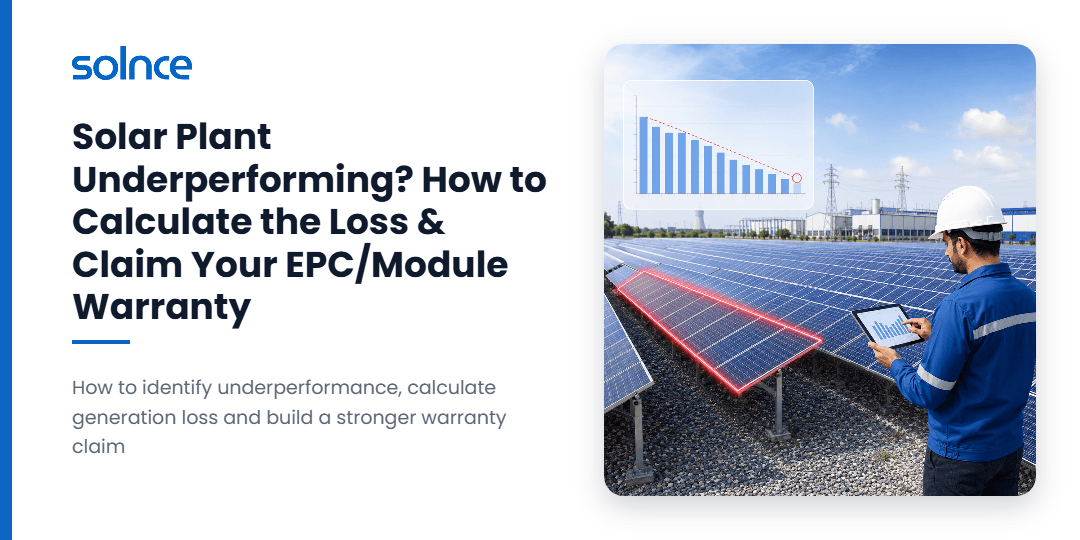
This last point is easy to underestimate. Dust and soiling can cut output by 15-25% in Indian conditions, so a maintenance plan is part of the financial case, not an afterthought.
Planning an Industrial Project Well
A strong project starts with data. A proper assessment looks at your past consumption, load timing, sanctioned demand, roof structure and shading before a single panel is specified. Oversizing wastes capital, while undersizing leaves savings on the table. A well-engineered industrial solar system is matched precisely to how your facility actually uses power.
Financing has also matured. Many MSMEs can access term loans, and some states offer interest subsidies for qualifying units, which improves cash flow during the payback period. The combination of subsidy support, net metering and falling system costs makes 2026 a strong moment to commit.
How Solnce Helps
At Solnce, we design industrial solar around your operations, not a generic template. We study your load profile and tariff, engineer a system sized to maximise self-consumption, and handle approvals, net metering and commissioning end to end. After installation, our cleaning and maintenance teams keep the plant generating at its rated output so your payback stays on track and your savings compound for decades. If you want to cut both your power bills and your carbon footprint, get a free quote and let us model the numbers for your facility.