Monocrystalline Solar Panels: Efficiency, Cost and Whether They're Worth It
Last updated at : Aug 13, 2026
Monocrystalline panels are the most popular choice for Indian rooftops in 2026, and for good reason. Made from a single, pure silicon crystal, they deliver the highest efficiency of any mainstream panel and look sleek with their uniform black cells. But premium performance comes at a premium price, so it pays to understand exactly what you are getting.
What Is a Monocrystalline Panel?
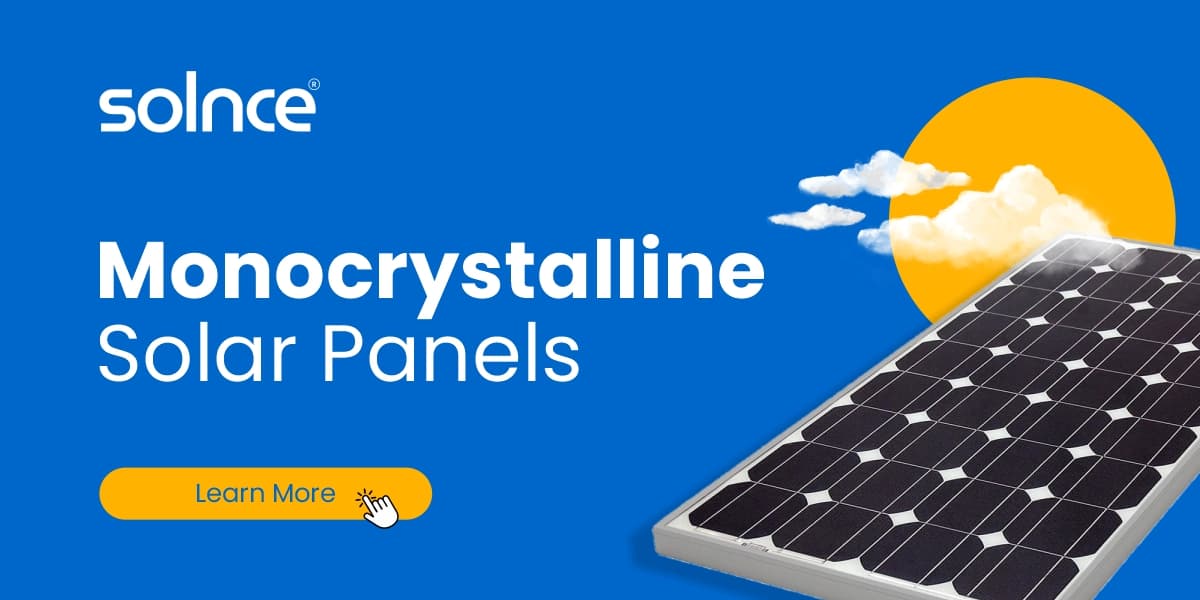
The "mono" in monocrystalline refers to the single crystal of silicon used to grow each cell. Because the silicon structure is uniform and pure, electrons move through it more freely, producing more electricity from the same amount of sunlight. You can spot these panels by their solid black colour and the rounded corners on each cell.
Within this family you will hear two important upgrades:
- PERC (Passivated Emitter and Rear Cell): adds a reflective rear layer so the cell captures light it would otherwise lose, boosting output.
- Bifacial monocrystalline: generates power from both the front and back of the panel, ideal when light reflects off the ground or a roof.
Key Numbers to Know
| Metric | Typical Monocrystalline Value |
|---|---|
| Efficiency | 18%–22% (premium TOPCon variants higher) |
| Lifespan | 25–30 years |
| Product/performance warranty | Often up to 25 years |
| Cost per watt | ₹75–₹125 |
| Indicative 5 kW system cost | ₹7.5–₹12.5 lakh before subsidy |
These figures are approximate and move with brand, technology generation and order size. The headline takeaway: mono panels cost more upfront but produce more electricity per square metre and last decades.
Advantages of Monocrystalline Panels
- Highest efficiency of common panel types, so you need fewer panels for a given output.
- Compact footprint, which is perfect for small or shaded urban rooftops.
- Better high-temperature and low-light performance than older polycrystalline modules.
- Longest expected lifespan with slow, predictable degradation.
- Premium aesthetics with an all-black finish that blends into most roofs.
The Trade-offs
No panel is perfect. Mono modules have a few drawbacks worth weighing:
- Higher upfront cost per watt than polycrystalline.
- Manufacturing waste, since shaping the cells trims away some silicon.
- Marginal benefit on large open sites, where cheaper panels and extra space can deliver the same total output for less.
How They Perform in Indian Conditions
India's climate is demanding on solar equipment, with intense summer heat, dust and a heavy monsoon. Monocrystalline panels handle this well. Their lower temperature coefficient means they shed less output on a hot afternoon than older poly modules, and PERC and TOPCon variants hold up better in the diffused light of cloudy or hazy days. That said, no panel likes dust. A thin layer of grime can cut generation noticeably, so a simple cleaning routine matters as much as the panel grade you buy.
Monsoon resilience comes down to the full package rather than the cell itself. A quality mono panel sealed in a robust frame, mounted on a structure rated for your local wind speed, will run reliably for decades. This is why the mounting and installation quality deserve as much attention as the module specification.
Reading the Datasheet
Before you sign off on a quote, ask for the module datasheet and check a few lines:
- Rated power and tolerance, so you know the real minimum output.
- Module efficiency, to confirm it matches what was promised.
- Temperature coefficient, where a lower (less negative) value is better in our heat.
- Annual degradation rate, ideally well under 0.7% for a premium module.
- Both warranties, product and performance, with the year-25 output guarantee stated.
If a seller cannot produce these numbers, treat that as a warning sign.
Are They Right for You?
Choose monocrystalline panels if your roof space is limited, your electricity bills are high, or you simply want the best long-term return and the cleanest look. For a typical city home, the higher efficiency usually means you can fit a complete system on the available roof, which a lower-efficiency panel might not allow.
If you have plenty of unshaded land and a tight budget, you might compare mono against polycrystalline or even a ground mounted solar setup before deciding. The right answer always comes down to roof area, consumption and budget together.
How Solnce Helps
At Solnce Energy we install monocrystalline systems sized precisely to your home or business, using MNRE-listed, IEC-certified modules from trusted Indian manufacturers. We handle the site survey, design, installation and subsidy paperwork end to end for residential solar and commercial clients. Explore our services or read more on the solar blog, and when you are ready, get a free quote so we can recommend the exact panel that fits your roof and budget.