Solar Street Lights: How They Work and What to Look For
Last updated at : Aug 13, 2026
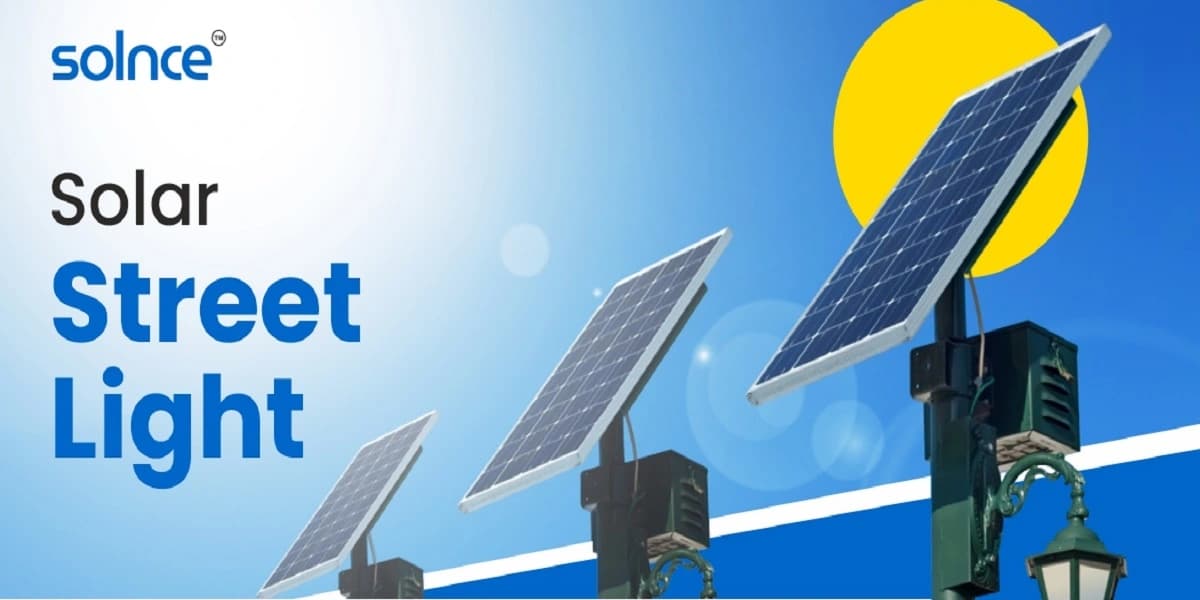
A solar street light is the simplest possible solar system: a panel, a battery, an LED and a controller, all in one weatherproof fixture, with no wiring trench and no electricity bill. For roads, campuses, factories, farms and gated communities across India, they have quietly become the default choice for outdoor lighting. This guide explains how they work and how to pick one that actually lasts.
How a solar street light works
Every unit follows the same daily cycle:
- The solar panel charges the battery through daylight hours.
- A charge controller manages charging and prevents over- or under-charge.
- At dusk, a light sensor switches the LED on automatically.
- The battery powers the LED through the night and recharges the next day.
Because each pole is self-contained, there is no dependence on the grid, no cabling between poles, and no monthly running cost. That independence is the whole appeal.
Choosing the right LED wattage
The brightness you need depends on where the light will go. Common LED ratings are 9W, 12W, 15W, 18W and 24W. Higher wattage means more light and a larger pool of coverage, but also a bigger panel and battery to feed it.
| LED rating | Typical use |
|---|---|
| 9W–12W | Pathways, gardens, internal campus roads |
| 15W–18W | Society roads, parking areas, small streets |
| 24W | Main roads, highways, large open yards |
The honest approach is to match wattage to the task. Over-spec a garden path and you pay for light you don't need; under-spec a main road and the area stays dim.
Why battery quality decides everything
The battery is where cheap and good units part ways. A modern fixture uses a lithium-ion or lithium-iron-phosphate (LFP) battery, which can last up to 10 years and survives the daily charge-discharge cycle far better than old lead-acid packs. A weak battery is the number one reason a solar street light fades after a couple of monsoons.
When comparing units, ask specifically about:
- Battery chemistry (insist on lithium / LFP)
- Backup duration — how many hours and how many cloudy "autonomy" days
- Whether the battery is replaceable separately from the panel
What it costs in India
A complete solar street light typically runs between ₹11,000 and ₹25,000 per unit, depending on wattage, battery size, pole height and build quality. That is the all-in cost — panel, battery, light and controller — with no trenching, no cabling and no recurring electricity charge afterwards. Over a multi-year horizon, the absence of running costs is what makes them economical at scale.
Warranty and lifespan
Quality matters because these fixtures live outdoors in heat, dust and rain. Look for:
- A complete-system warranty of around 5 years
- A solar panel warranty stretching up to 25 years
- A lithium battery rated for up to 10 years of service
- An IP-rated, corrosion-resistant housing
A longer panel warranty signals a manufacturer that trusts its own hardware.
All-in-one vs split designs
Solar street lights come in two layouts, and the difference affects both looks and serviceability. All-in-one units pack the panel, battery, controller and LED into a single compact head — quick to install and tidy, but the battery shares the LED's heat and the whole head must come down for service. Split (semi-integrated) designs mount the panel separately from the light fixture, which lets you angle the panel for maximum sun and keep the battery cooler, at the cost of a slightly more involved installation. For large roads and harsh sun, split designs often last longer; for pathways and quick deployments, all-in-one is hard to beat.
A simple buying checklist
- Decide the area to light and pick the LED wattage to match.
- Confirm a lithium / LFP battery with enough backup and autonomy days.
- Check the pole height suits the spacing and mounting.
- Verify IP rating and weatherproofing for Indian conditions.
- Compare warranties on the system, panel and battery separately.
Why maintenance still matters
"No running cost" does not mean "no attention." Dust on the panel cuts charging, and a loose mount or clogged fixture shortens life. A periodic clean and inspection — the same logic as solar maintenance for rooftop systems — keeps every pole performing through the years.
How Solnce helps
Whether you are lighting a single lane or an entire industrial campus, Solnce specifies the right wattage, battery and pole for the job and installs units built to survive Indian weather. The same engineering care we bring to residential solar goes into our outdoor lighting projects. Explore more on our solar blog, and to plan a streetlight installation for your site, get a free quote.