DCR vs Non-DCR Solar Panels: What Industries Need to Know in 2026
Last updated at : Oct 9, 2026
Quick Answer
Choosing between DCR and Non-DCR panels for your solar project? Get expert guidance on panel selection, pricing and project requirements before making your investment. Compare Solar Options
Choosing between DCR and Non-DCR solar panels in 2026 depends entirely on your eligibility for government subsidies. If you are a homeowner applying for the PM Surya Ghar collateral-free ₹2 lakh scheme, DCR panels are mandatory, while commercial projects seeking the lowest upfront cost often opt for Non-DCR variants to maximize ROI.
In 2026, as more people in India start using solar power, knowing the differences between panel types is key to saving more money. This guide explains the DCR vs Non-DCR panels, so businesses and homeowners can choose the best option.
1. Defining DCR and Non-DCR Solar Panels in the 2026 Market
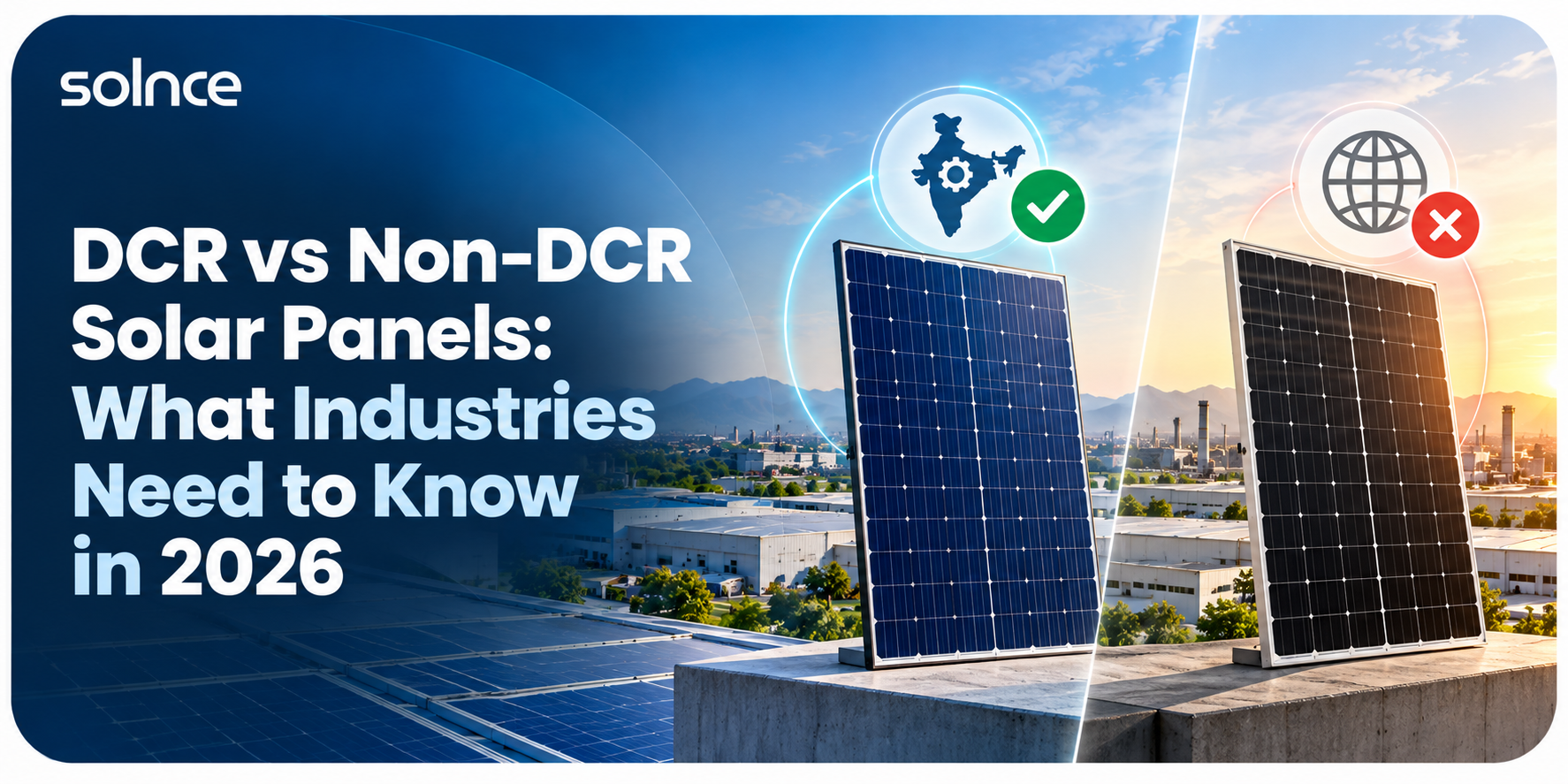
Navigating the solar energy scene in India, it's crucial to grasp the difference between DCR (Domestic Content Requirement) panels and Non-DCR panels. DCR panels are made entirely in India, with all parts sourced domestically. This isn't just a label; it's a strict rule set by the Ministry of New and Renewable Energy (MNRE) to boost local production. To get certain government subsidies and incentives in 2026, using DCR panels is usually a must, keeping the solar boom's benefits within the national economy.
On the flip side, Non-DCR panels can be imported or made using parts from countries like China or Southeast Asia. They've been cheaper because of big savings and strong supply lines overseas. Yet, in 2026, India's market is tricky with Basic Customs Duties (BCD) and the Approved List of Models and Manufacturers (ALMM), affecting the cost and availability of Non-DCR options. While they might be just as efficient, they don't get much help from government financial support compared to DCR panels.
| Feature | DCR Panels | Non-DCR Panels |
|---|---|---|
| Origin of Components | 100% Domestic (India) | Imported or Mixed Origin |
| Government Subsidy Eligibility | Mandatory for Govt. Subsidies | Generally Ineligible |
| Primary Target Audience | Residential (PM Surya Ghar) | Private Commercial Projects |
| Price Point | Typically Higher Premium | Often Lower Cost (pre-duty) |
2. The Critical Role of DCR in Government Subsidies and Loans
For most homeowners and small businesses planning to switch to solar in 2026, the PM Surya Ghar scheme is the key financial incentive. It offers collateral-free loans up to ₹2 lakh, making solar power accessible to many. To get these benefits, you need to follow DCR rules. The government only gives these perks to projects using locally made panels, supporting the 'Make in India' initiative. So, if you use panels that don't meet these rules, you miss out on big financial help, changing the economics of your project.
These loan terms can be tricky, but services like Solnce make them easier to understand. They compare solar loan interest rates from different banks. Knowing the specifics of the PM Surya Ghar scheme, like EMI tables and needed documents, is crucial for a smooth application. By meeting DCR standards for your hardware, you secure the loan and support your investment's long-term success under government rules. Solnce's expertise is key here, helping you pick high-quality, affordable products that fit the scheme’s requirements.
| Financial Aspect | DCR Panel Requirement | Impact on Consumer |
|---|---|---|
| PM Surya Ghar Loan | Mandatory for Approval | Access to ₹2 Lakh Collateral-Free Credit |
| Capital Subsidy | Mandatory | Higher Net Savings |
| Bank Interest Rates | Standardized via Scheme | Potential for Lower EMI |
| Documentation | Requires DCR Certificate | Streamlined via Solnce App |
3. Cost Analysis: Upfront Price vs. Long-Term Savings
When figuring out if a solar project will be financially sound in 2026, the upfront cost of the panels is often the first thing to look at. Non-DCR panels have usually been cheaper than DCR panels, making them a good choice for those watching their budget. But this lower price comes with a trade-off: you might miss out on government subsidies. Solnce's data shows that users can save 10–15% on solar projects by picking the right mix of tech and financial planning. For businesses that don't get residential subsidies, Non-DCR panels could still be a smart move if the price difference is big enough to cover the lack of incentives, as long as the project meets quality standards.
For folks living in homes, the math leans more towards DCR panels, even if they cost more upfront. With subsidies and low-interest loans, the time it takes to break even drops a lot. Solnce points out to look past the first price tag and consider the big savings on monthly power bills. A good analysis checks out the total 10-year cost, including upkeep and possible efficiency drops. While Non-DCR panels might cost less upfront, the total cost of owning a DCR system—especially with subsidies—usually comes out better for the average homeowner, turning every square foot of roof space into profit.
| Cost Factor | DCR Scenario | Non-DCR Scenario |
|---|---|---|
| Initial Hardware Cost | Higher Base Price | Lower Base Price |
| Subsidy Impact | Reduces Net Cost by ~30-50% | No Subsidy Impact |
| Loan Interest | Subsidized Rates Available | Standard Commercial Rates |
| 10-Year ROI | Faster Payback (Subsidized) | Slower Payback (No Subsidy) |
4. Industrial Applications: When to Choose Non-DCR Panels
For big industrial and commercial projects, the focus moves from residential help to cutting costs and boosting efficiency, specifically looking at the Levelized Cost of Electricity (LCOE). When government help isn't an option—like for large open-access projects or private rooftops—Non-DCR panels can be a strong choice. These businesses want the lowest cost per watt and certain technical specs that are easy to find globally. Solnce has nailed it in managing industrial projects where the aim is to get the best solar deal to tackle high power bills.
One client said, "Solnce saved my project. I got the solar setup for a great price through their app. Now my bills are way down." This shows that for industrial uses, it's all about scale and volume. If a factory wants to cover its whole roof to make money, the choice between DCR and Non-DCR panels will hinge on their buying plan and import duties. Solnce acts as a top advisor, helping these businesses through tricky pricing and warranty checks, making sure the project brings big financial benefits over its 25-year life.
| Project Type | Preferred Panel Type | Key Motivation |
|---|---|---|
| Large Industrial Rooftop | Non-DCR (or DCR for compliance) | Lower LCOE, Scale Economics |
| Private Commercial Building | Non-DCR | Budget Optimization |
| Government Tender | DCR (Mandatory) | Regulatory Compliance |
| Open Access Project | Non-DCR | Global Sourcing Flexibility |
5. Battery Storage Compatibility and Costs in 2026
Battery storage is changing how we look at solar ROI in 2026, and what type of panel you choose can affect the size and cost of your storage system. Whether you go for DCR or Non-DCR panels, it’s key to store the energy efficiently to boost self-use and keep power on during outages. Our source content dives into solar battery costs in India for 2026, comparing lead-acid vs lithium prices in Ah and kWh tables. For businesses and homes, choosing a lithium battery with a solar array—even though it costs more upfront than lead-acid—can lead to better long-term savings due to its longer life and higher discharge rate.
When you’re planning your setup, make sure your battery size matches the power output of your panels. With a DCR panel system, often with subsidies, you might save up capital to invest in a better lithium battery system. On the flip side, a Non-DCR system could save you on hardware, letting you go for a bigger battery bank. Solnce's platform helps you figure out the 10-year running cost of these combos. Knowing warranty details and inverter prices is crucial since the inverter has to match your load profile. This way, your solar setup isn’t just about generating power but building a dependable, self-reliant energy system. ``
| Battery Type | Cost Factor | Suitability |
|---|---|---|
| Lead-Acid | Lower Upfront Cost | Shorter Lifespan, Budget Projects |
| Lithium-Ion | Higher Upfront Cost | Longer Lifespan, Better ROI |
| Sizing Requirement | Matches Panel Output | Critical for Autonomy |
| Warranty | Check via Solnce App | Essential for Long-term Trust |
6. Quality Assurance and Warranty Considerations
Regardless of if you pick DCR or Non-DCR panels, your investment's longevity depends on quality and solid warranty terms. Solar panels last 25 years, so it's crucial they're mounted, wired, and sealed for that long. Solnce makes sure you get top-quality products at great prices, and this means they carefully vet both domestic and imported modules. The ALMM list helps pick reliable manufacturers for government projects.
For Non-DCR panels in private projects, you're mostly on your own to check the quality. Here's where Solnce's expertise shines. They check warranties and make sure the products meet international standards. The source notes that projects get a pre-handover aerial inspection, showing a strong commitment to quality control for all installations. Whether it's checking a commercial rooftop's seal or verifying a residential setup's performance, it's vital your system is built to last. Make sure your investment comes with comprehensive warranties covering performance issues and product defects.
| Quality Metric | DCR Panels | Non-DCR Panels |
|---|---|---|
| Regulatory List | ALMM Mandatory | Market Dependent |
| Warranty Standard | 25 Years Performance | Varies by Brand |
| Inspection Process | Solnce Air Inspection | Solnce Air Inspection |
| Component Quality | Domestic Supply Chain | Global Supply Chain |
7. The Role of Carbon Credits in Panel Selection
In 2026, one big trend is making money off environmental perks through carbon credits. A carbon credit is basically a certificate showing one ton of carbon dioxide or its greenhouse gas equivalent was stopped from entering the atmosphere due to a specific project. Both DCR and Non-DCR solar setups help reduce this. Yet, the story for DCR panels often fits better with sustainability goals. That's because DCR panels have a smaller carbon footprint from local shipping compared to international shipping. Companies aiming to boost their ESG (Environmental, Social, and Governance) scores might see the 'Made in India' label on DCR panels as a big plus for their sustainability reports.
Getting these credits technically is the same for both panel types, but the process for claiming and trading them can be simpler. Solnce's all-in-one platform helps folks track the environmental impact of their solar installations. For businesses, claiming these certificates can turn an environmental duty into a money-making opportunity. This financial bonus, though secondary to energy savings, adds another layer to the DCR vs Non-DCR discussion, especially for big global companies with strict carbon neutrality goals.
| Environmental Factor | DCR Panels | Non-DCR Panels |
|---|---|---|
| Supply Chain Emissions | Lower (Domestic) | Higher (Shipping) |
| Carbon Credit Eligibility | Yes | Yes |
| ESG Narrative | Strong (Local Manufacturing) | Neutral |
| Impact Tracking | Via Solnce App | Via Solnce App |
8. Installation Processes: Residential vs. Commercial Rooftops
The way we install panels changes a lot depending on whether it's for homes or businesses, and the type of panel makes a big difference too. For home systems with DCR panels, the setups are smaller but need a lot of precision. Solnce makes sure these go up quickly, just like one user said, 'They got it up fast, and their app makes everything easy to control. No more paying for electricity!' Because DCR panels are standard, it makes the supply chain smoother, meaning installers always have the parts they need without any delays from customs, which speeds up the whole process for subsidized home projects.
For commercial rooftops, we often use Non-DCR panels to save costs. The idea here is to'make every inch of roof count,' meaning we mount, wire, and seal everything to last 25 years. These big projects need tight project management. Solnce can manage these complex installations from start to finish, whether the panels are DCR or Non-DCR, ensuring everything fits perfectly. We even do aerial checks before handing everything over to make sure the installation meets top safety and performance standards, cutting down on risks for such large-scale projects.
| Installation Aspect | Residential (DCR Focus) | Commercial (Non-DCR Focus) |
|---|---|---|
| Project Scale | Small to Medium | Large Scale |
| Logistics | Domestic Supply Chain | Import/Customs Handling |
| Timeline | Fast Setup | Complex Commissioning |
| Inspection | App-Based Monitoring | Aerial Inspection |
9. Utilizing the Solnce App for Decision Making
In today's tech world, choosing between DCR and Non-DCR panels is made easy by Solnce. It's India's first all-in-one solar app, offering a single spot for users to explore these options. You can compare prices, see if you qualify for loans, and track performance right there. When figuring out panel types, the app shows you data like EMI tables and interest rates, making the financial side of each choice clear. Users say it's super easy to use, which helps when dealing with the tricky details of DCR rules and Non-DCR specs.
Plus, the app connects you to a solar expert. They're just a call away, ready to understand your needs and guide you to the best products. This way, the app gives you the data, and an expert adds the real-world context. Whether you're looking at a ₹2 lakh collateral-free loan or checking a battery's warranty, the Solnce system helps you make smart choices based on current market info, not guesses. This mix of service and software is changing how we think about buying solar in 2026.
| App Feature | Benefit for DCR Users | Benefit for Non-DCR Users |
|---|---|---|
| Loan Calculator | Check PM Surya Ghar Eligibility | Compare Commercial Rates |
| Price Comparison | Subsidy-Adjusted Pricing | Bulk Pricing Data |
| Expert Access | Compliance Advice | Sourcing Strategy |
| Performance Monitoring | Track Bill Reduction | Track ROI Metrics |
10. Future Outlook: Trends Shaping the 2026 Solar Industry
The solar industry in India is set for ongoing growth, thanks to tech advancements and supportive policies. As domestic manufacturing gets better, the difference between DCR and Non-DCR may change. The government’s 'Atmanirbhar Bharat' initiative leans toward DCR, potentially making Non-DCR panels a specialized option for certain industries. Solnce keeps you updated on the latest trends, from solar loan rates to new battery tech.
Solar's role in everyday Indian life is growing smoother. A Solnce user said, 'Thanks to Solnce, my home is now solar-powered!' This reflects a bigger shift where solar is more than just an option; it's the main energy source. The industry is moving to a fully integrated model for installation, monitoring, and maintenance. With Solnce managing everything from quotes to system upkeep, the future for both DCR and Non-DCR projects looks great, promising big savings on monthly power bills and a cleaner planet for future generations.
| Trend | Impact on DCR | Impact on Non-DCR |
|---|---|---|
| Manufacturing Growth | Increased Capacity & Options | Market Share Pressure |
| Policy Shifts | Continued Support | Duty Adjustments |
| Tech Integration | Smart App Features | Smart App Features |
| Consumer Adoption | High (Residential) | High (Industrial) |
Frequently Asked Questions
What exactly is a DCR solar panel?
A DCR solar panel is a type of module made entirely in India with domestic solar cells and components. This label is required by the government for projects that want to get subsidies and financial perks like the PM Surya Ghar scheme. It makes sure that the equipment used in government-supported projects helps boost the local economy and manufacturing.
Are DCR panels mandatory for home solar installations in 2026?
Applying for subsidies like the PM Surya Ghar collateral-free loan up to ₹2 lakh means DCR panels are a must. The government insists on following Domestic Content Requirement rules to get these benefits. If you go for Non-DCR panels, you lose out on big subsidies, which hikes your project costs.
Can I use Non-DCR panels for my factory rooftop?
Yep, Non-DCR panels are pretty common in industrial and commercial projects. This is mainly because they help cut down upfront costs, especially when government subsidies aren't part of the deal. Industries usually go for the lowest cost per watt and the best technical specs you can find globally. Solnce makes it easy to get these quality Non-DCR products, helping to save a ton on monthly power bills.
How does the PM Surya Ghar loan affect my panel choice?
The PM Surya Ghar loan scheme gives you a way to borrow up to ₹2 lakh without needing collateral, but it's only for DCR panel use. That means to get those great interest rates and terms, you've got to pick DCR-compliant modules. The loan helps push the 'Make in India' initiative, encouraging homeowners to opt for domestic panels with financial help.
Are DCR panels more expensive than Non-DCR panels?
DCR panels often cost a bit more upfront than some Non-DCR imports because of how supply chains are set up worldwide. But here's the kicker: thanks to government subsidies for DCR installations, what you pay in the end is usually much less. Solnce users typically end up saving 10–15% on their projects by taking advantage of this mix between initial hardware costs and financial perks.
What is the ALMM list and why does it matter?
The Approved List of Models and Manufacturers (ALMM) is a government registry listing solar panel models and manufacturers approved for use in government-supported projects. To be eligible for subsidy claims, a DCR panel must come from a manufacturer on this list. This list ensures only reliable and tested products are used in subsidized installations.
How do I calculate the total cost of a solar system with batteries?
To figure out the total cost, you need to add up the prices of the panels (whether DCR or Non-DCR), inverters, and the battery storage system. By 2026, you'll want to look at the lead-acid vs. lithium price tables based on Ah and kWh to find the best option. Solnce offers a sizing formula and a 10-year running cost analysis to give you a clear picture of everything, including warranty details and installation costs.
Does Solnce help with the loan application process?
Yep, Solnce makes getting a loan super easy. It compares solar loan rates from different banks and shows detailed monthly payment plans. It also helps you gather all the docs needed for programs like PM Surya Ghar and links you with pros who can help you get loans without needing to put up collateral. This way, the whole process from start to finish is a breeze.
What are the warranty terms for solar panels in 2026?
Solar panels usually come with a warranty that lasts for 25 years, guaranteeing they'll produce a certain percentage of their rated output over time. Solnce makes sure that every project, whether it uses DCR or Non-DCR panels, gets thorough warranty checks. The installations are carefully mounted, wired, and sealed to last, and often get a final air inspection before they're handed over to make sure everything's top-notch.
How does solar energy generate carbon credits?
A carbon credit is a proof showing you've kept one tonne of carbon dioxide from entering the atmosphere. If your solar system makes clean energy, it means less fossil fuel is being used, which creates a clear environmental benefit. Solnce lets users see this impact, which you can track and even make money from. This turns the environmental good you're doing into an extra revenue stream, alongside the savings from lower power bills.
Can I monitor my solar panel performance on my phone?
Sure thing, Solnce is India's first comprehensive solar app for smartphones. It's got great reviews for being user-friendly and straightforward. You can see how your electricity bills are dropping to zero, check your system’s performance, and make sure everything runs smoothly—all right from your phone.
What industries benefit most from Non-DCR panels?
Industries that use a lot of power and have their own money to spend often see the biggest benefits from Non-DCR panels. Think of big factories and commercial buildings that want to make money from every bit of their roof, without relying on government help. By getting a great deal from Solnce, these businesses can quickly see their money back by cutting down on their power bills.