PM Surya Ghar Muft Bijli Yojana 2026: Subsidy, Eligibility and How to Apply
Last updated at : Aug 13, 2026
If you have been watching your monthly electricity bill creep up and wondering whether rooftop solar is finally worth it, the PM Surya Ghar Muft Bijli Yojana is the scheme that tips the maths in your favour. It is the central government's flagship rooftop solar programme, and it puts a meaningful chunk of your installation cost back in your pocket. Here is how it actually works in 2026, written plainly for Indian homeowners.
What is PM Surya Ghar Muft Bijli Yojana?
Launched to bring affordable solar power to crores of households, this scheme provides a direct Central Financial Assistance (CFA) to families who install a grid-connected rooftop solar system. The goal is simple: lower your bill, give you cleaner power, and let you export surplus electricity back to the grid for credit.
The word "Muft" (free) in the name reflects the ambition — many homes that size their system correctly end up paying close to nothing for electricity each month, while the subsidy shrinks the upfront cost.
The 2026 subsidy slabs
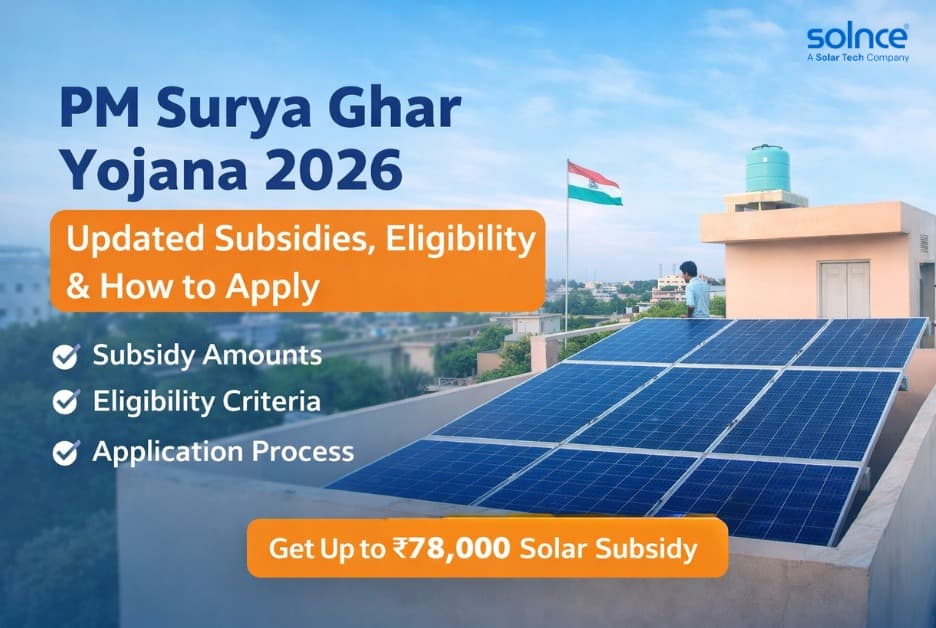
The subsidy is calculated per kilowatt (kW) of system capacity, with a cap once you cross 3 kW. The structure below is approximate and rounded to how it commonly applies in 2026 — always confirm the latest numbers on the national portal before you commit, as rules can change.
| System Size | How the Central Subsidy Is Calculated | Approx. Subsidy |
|---|---|---|
| 1 kW | Rs 30,000 for the 1st kW | ~Rs 30,000 |
| 2 kW | Rs 30,000/kW for the first 2 kW | ~Rs 60,000 |
| 3 kW | Rs 60,000 (first 2 kW) + Rs 18,000 (3rd kW) | ~Rs 78,000 |
| Above 3 kW | Capped at the 3 kW amount | ~Rs 78,000 (max) |
In short: you earn Rs 30,000 per kW for the first two kilowatts, Rs 18,000 for the third, and nothing extra beyond that. A 3 kW system is the sweet spot for most families because it hits the maximum subsidy.
Several states layer their own top-up on top of this central amount. Gujarat and Rajasthan, for example, have at various points offered additional state support that can further reduce your net cost. Because state schemes are revised periodically, treat any state figure as indicative until your installer confirms what is live in your district.
Who is eligible?
You qualify if you tick these boxes:
- You are an Indian citizen and own the residential property (or have authority to install on the roof).
- You have a valid electricity connection in your name with your local DISCOM.
- The roof is structurally suitable and not already covered by another solar subsidy.
- You opt for a grid-connected system. Off-grid and battery-only setups do not qualify for the central subsidy.
- The installation is done by a registered vendor and uses approved panels and inverters.
What size system do you need?
A quick way to estimate capacity is to look at your average monthly consumption in units (kWh):
- 0–150 units/month: a 1–2 kW system is usually enough
- 150–300 units/month: aim for 2–3 kW
- 300–500 units/month: consider 3–5 kW
Our team can size this precisely after looking at a few of your past bills.
How to apply, step by step
- Register on the National Portal for Rooftop Solar using your DISCOM, consumer number and mobile.
- Apply for feasibility and wait for your DISCOM's approval.
- Choose a registered vendor (like Solnce) and finalise your system design and quote.
- Install the system and submit the project details.
- Net metering is set up and your installation is inspected by the DISCOM.
- Receive your subsidy directly into your bank account, typically within a few weeks of commissioning.
What this means for your wallet
A well-sized 3 kW system can knock roughly 70–80% off a typical household bill, depending on your usage pattern. After the subsidy, the net cost of a 3 kW system commonly lands in the range of about Rs 1.1–1.4 lakh, with most homeowners recovering that outlay in around 3–5 years. After payback, the panels — which last 25 years or more — generate power that is effectively free.
If you want to dig deeper into individual state benefits or financing, browse our solar blog or read about residential solar options.
How Solnce helps
Navigating portals, feasibility approvals and net-metering paperwork can feel like a maze. At Solnce, we handle the entire PM Surya Ghar journey for you — from sizing your system and registering your application to installation, inspection and getting the subsidy credited to your account. We are a registered vendor, so your eligibility stays intact and your payback timeline stays honest. If financing makes sense, we can also pair the scheme with low-cost solar loans.
Ready to find out exactly what you would save? Get a free quote and we will map your subsidy, system size and savings on a single, simple page.