How to Choose the Right Solar EPC Company for Your Project
Last updated at : Aug 13, 2026
When you invest in solar, you are not really buying panels, you are buying 25 years of generation. The company that designs and builds your system, your EPC partner, is what determines whether you actually get those 25 years of clean power or a plant that under-performs and frustrates you. Choosing the right solar EPC company is the single most important decision in the whole project, and it deserves more scrutiny than most buyers give it.
What Does an EPC Company Actually Do?
EPC stands for Engineering, Procurement and Construction. A good EPC partner takes responsibility for the entire system, end to end, rather than just selling you hardware.
- Engineering: Site assessment, structural analysis, system sizing and electrical design.
- Procurement: Sourcing quality modules, inverters, cabling and mounting.
- Construction: Installation, wiring, commissioning and grid connection.
The difference between a cheap installer and a real EPC company shows up in the details, in how the system is designed for your specific load, how components are matched, and how the plant is built to last.
The Mistake That Costs the Most
The most common error is choosing on headline price alone. A quote that looks attractively low usually achieves it by cutting something that matters, thinner cabling, weaker mounting structures, lower-tier modules or a cheaper inverter. These savings are invisible on day one and expensive over the years that follow, in the form of lost generation, early failures and warranty disputes.
Solar is a long-term asset. Spending a little more on engineering and quality protects two decades of returns.
What to Check Before You Sign
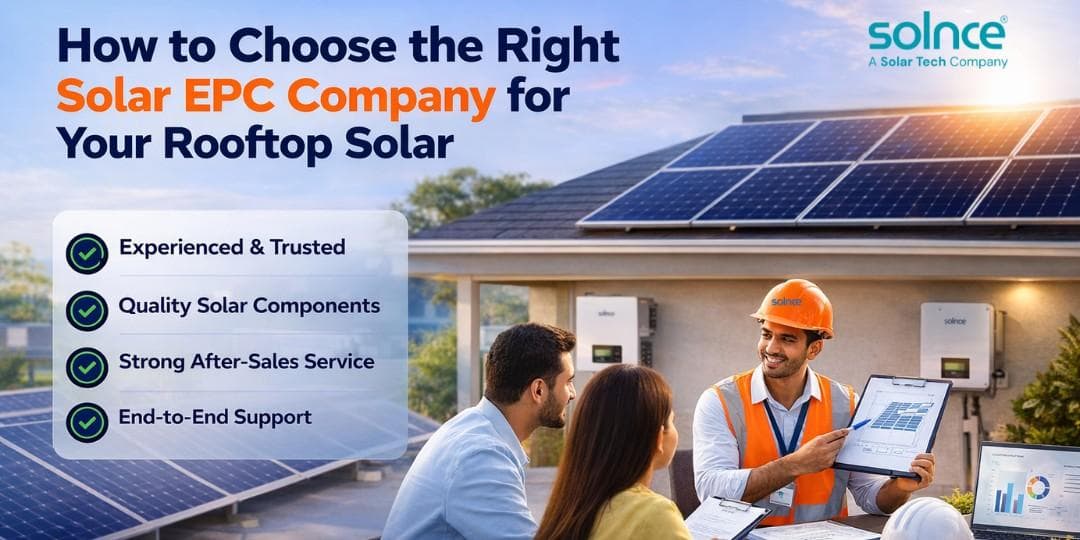
Use this checklist to compare EPC companies properly, not just on price.
| What to Verify | Why It Matters |
|---|---|
| Track record and references | Proof they have delivered similar projects |
| Component brands and warranties | Determines long-term performance |
| In-house design capability | Avoids generic, mis-sized systems |
| Net metering and approvals support | Saves you months of paperwork |
| Post-installation service | Plants need cleaning and maintenance |
| Clear, itemised quotation | Hidden exclusions cause later disputes |
Ask to see commissioned plants and speak to past clients. A confident EPC partner will be happy to show you working installations and walk you through the design decisions they made.
Do Not Forget Components
The quality of what goes into your system matters as much as the workmanship. Pay attention to the module and inverter brands, the warranty terms, and the balance-of-system components like cabling and mounting. If your design includes storage, remember that batteries are a significant cost, ranging anywhere from around Rs 15,000 to Rs 2,50,000 or more depending on type and capacity, so they should be specified deliberately rather than as an afterthought.
After Installation Is Where Value Is Won or Lost
A good EPC relationship does not end at commissioning. Solar systems are built to deliver savings for the next 25+ years, but only if they are kept clean and serviced. Dust and soiling alone can cut output by 15-25% in Indian conditions. A partner who offers ongoing solar cleaning and a structured solar maintenance plan is protecting your returns long after the panels go up.
For larger projects, this matters even more. An industrial solar plant is a multi-crore asset where a single EPC partner handling design, build and lifetime care removes the finger-pointing that happens when responsibilities are split across vendors.
How Solnce Helps
At Solnce, we are a full-service solar EPC partner, which means we own your project from the first site visit to decades of plant care. We engineer each system around your actual consumption, source quality components with real warranties, handle net metering and approvals, and stay on as your maintenance partner so the plant keeps performing. When one team is accountable for the whole lifecycle, you get the 25 years of generation you paid for. To discuss your project with engineers who will stand behind it, get a free quote.